What Is the Stone Tape Theory?
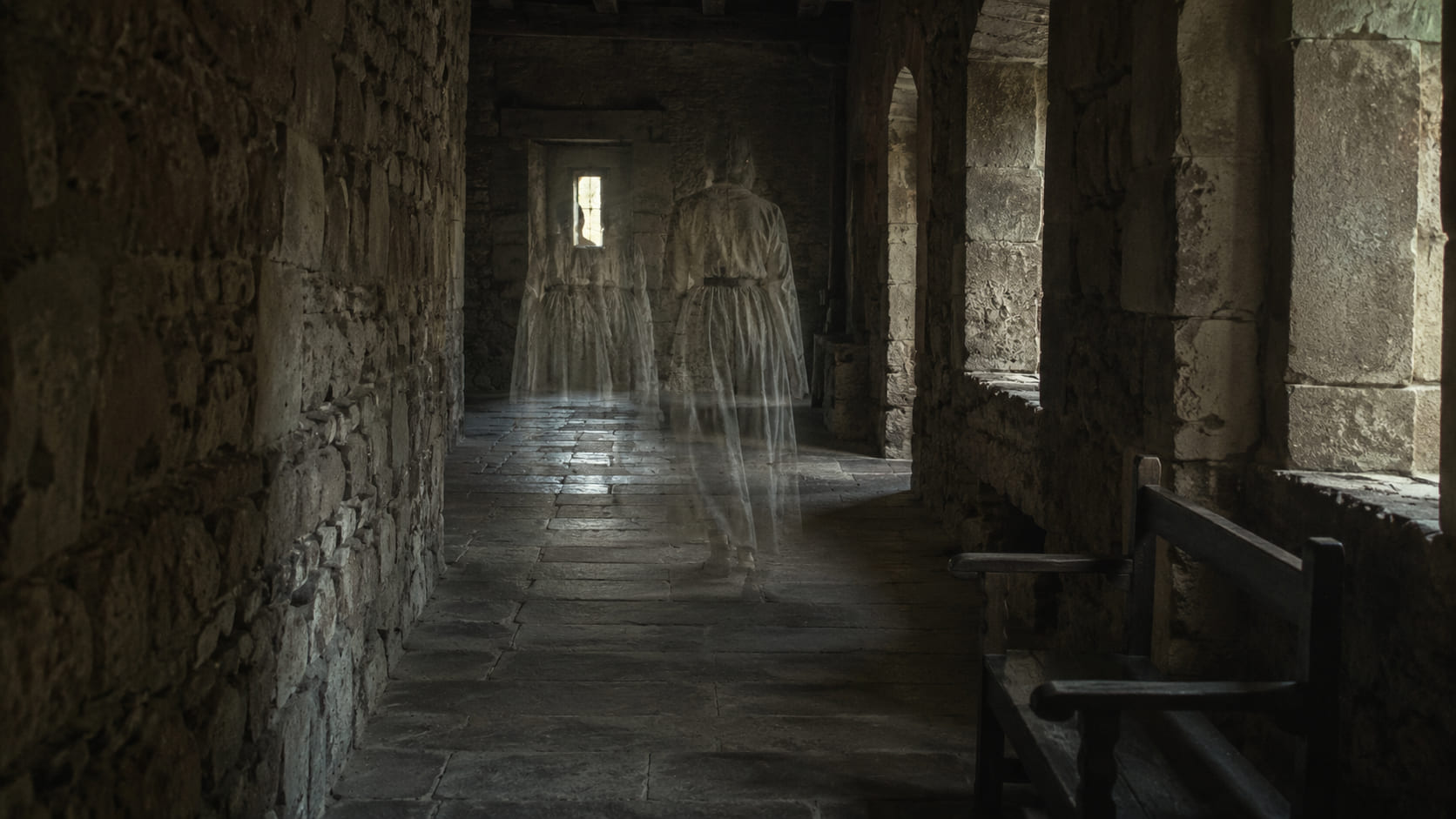
A ghost walks down the same corridor at the same time each night. It never turns toward witnesses, never answers questions, and seems unaware of the living. Paranormal folklore often calls this a “residual haunting,” and one popular explanation is the Stone Tape theory: the idea that buildings or natural materials can somehow record intense events and replay them later.
The theory sounds scientific because it borrows the language of recording technology, energy, and environmental storage. But there is an important difference between an evocative metaphor and an established physical mechanism.
The name came from fiction
The modern phrase “Stone Tape theory” was popularized by Nigel Kneale's 1972 television play The Stone Tape. In the story, researchers investigating a haunted room propose that the stone itself has recorded a traumatic event and can replay it through the minds of sensitive people.
The drama did not invent every part of the idea. Earlier thinkers had speculated that environments might retain traces of past events. But Kneale's title gave the concept a memorable name, and paranormal writers later treated it as a possible explanation for repetitive hauntings.
The basic claim, summarized in the history of the Stone Tape theory, is generally classified as pseudoscientific because no accepted physical process has been demonstrated that allows stone walls to record complex human events and later reproduce them as apparitions or sounds.
Why the analogy feels persuasive
Real recording technologies do store information in physical materials. Magnetic tape changes the orientation of magnetic particles. Film records patterns through chemical reactions. Digital storage changes physical states in electronic components. Crystals can have useful electrical properties, and some materials respond to pressure.
From there, it is easy to make an imaginative leap: perhaps stone could also store emotional or sensory information. The problem is that “information is stored physically” does not mean every material can record every kind of information.
A camera requires an optical system, light-sensitive material, and a way to decode the result. A microphone converts sound pressure into a changing signal. The Stone Tape theory has never identified a comparable encoding process for a complete human event, a reliable storage medium, or a mechanism that reconstructs the event for a witness decades later.
Residual haunting is a description, not proof of a cause
Reports of repetitive phenomena do exist. Witnesses describe footsteps on empty staircases, figures following fixed routes, and sounds that seem to recur without interaction. Calling such a pattern “residual” can be useful as a descriptive label.
The mistake comes when the label is treated as an explanation. A repeated sound may come from heating systems, plumbing, traffic cycles, neighboring activity, animals, or building movement. A repeated visual report may be influenced by the same lighting conditions, expectations, or viewing angles.
If several people are told that a woman in white appears on a particular staircase, later ambiguous glimpses are more likely to be interpreted through that story. Repetition can therefore arise from the environment, from human expectation, or from both.
Could buildings preserve anything about their past?
Absolutely, but usually in ordinary ways. Wear patterns show where people walked. Smoke discolors surfaces. Objects remain where someone left them. Architecture controls acoustics, temperature, airflow, and visibility. Historical records preserve stories associated with a place.
The difference is important because haunted-place research often mixes physical traces, local stories, and spontaneous experiences into one category. A careful investigation keeps them separate.
What evidence would the theory actually require?
A testable Stone Tape mechanism would need to identify the material property that stores the information, the conditions that create the recording, and the conditions that trigger playback. Researchers should then be able to predict where an effect will happen and measure the stored signal independently of witness expectation.
Ideally, the process would work in controlled experiments. If emotional events can imprint stone, researchers could expose matched materials to different conditions, conceal which sample experienced which event, and test whether observers or instruments can identify them above chance.
Without reproducible results, the theory remains speculative. Finding quartz in a haunted building is not enough. Quartz is common, and its piezoelectric properties do not demonstrate the storage of memories, emotions, or visual scenes.
Environmental explanations are easier to test
Researchers can measure temperature, humidity, vibration, low-frequency sound, electromagnetic conditions, and air quality. They can compare supposedly active areas with control locations and test whether witness reports cluster around specific environmental changes.
Our earlier discussion of infrasound in haunted locations shows what a more testable hypothesis looks like. Low-frequency sound is measurable, has known physical sources, and has been studied experimentally. Even then, researchers must avoid exaggerating what the evidence shows.
The Stone Tape idea currently lacks that foundation. It may inspire investigation, but it cannot be used as a conclusion simply because no other cause has been found.
The lasting value of a scientifically sounding ghost story
The theory survives because it fits a particular kind of haunting extremely well. A non-interactive apparition behaves like a recording. The metaphor is intuitive, and modern technology has trained us to think of information as something that can be captured and replayed.
But good psychical research requires resisting explanations that feel right before they can be tested. A mystery does not become scientific because scientific vocabulary is attached to it.
The Stone Tape theory is best understood as a culturally influential hypothesis with roots in older speculation and a memorable work of fiction. It gives paranormal investigators a language for repetitive reports, but no established evidence shows that buildings record traumatic events like magnetic tape.
That does not make residual-haunting stories uninteresting. It changes the question. Instead of asking what the walls remembered, we can ask what repeatedly happens in the environment, what witnesses know beforehand, and what evidence would distinguish a physical recording from a powerful pattern of human perception.