Sleep Paralysis and Shadow People: What Is Really Happening?
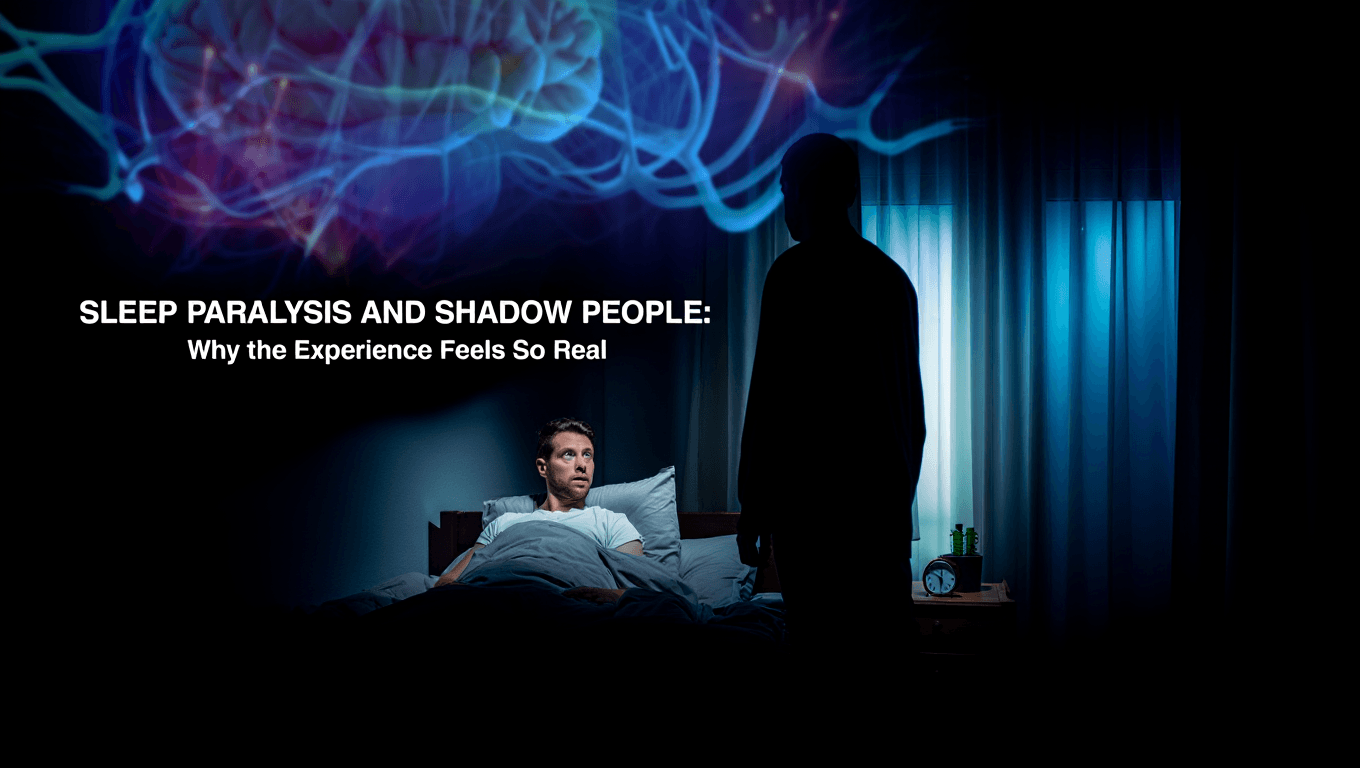
Few experiences feel as paranormal as waking up unable to move while sensing someone in the room. Many people describe a dark figure, pressure on the chest, whispering, footsteps, or a presence near the bed. In folklore and ghost stories, this can become a shadow person, night hag, demon, or visitor from another place.
Sleep paralysis gives a strong natural explanation for many of these reports. The National Center for Biotechnology Information describes sleep paralysis as a state in which consciousness returns while the muscle atonia of REM sleep remains. In plain terms, the mind wakes up before the body fully regains movement. That mismatch can be frightening.
The experience is often accompanied by hallucinations. NCBI notes that intruder and incubus-type hallucinations can occur. Intruder hallucinations involve the sense of a dangerous person or presence nearby. Incubus-type experiences can involve pressure on the body or chest. These details match many older reports of night spirits and bedroom hauntings.
This does not mean the person is lying. It means the experience can be real to the person while the cause may be tied to sleep, perception, and fear. A person can genuinely feel watched, hear a voice, or see a figure. The question is whether that perception points to an external entity or to the brain entering a mixed sleep-wake state.
Shadow people reports are a good example. The figure is often dark, vague, and human-shaped. That makes sense from a perception point of view. In a low-light room, the brain can fill gaps quickly, especially when the body is frozen and the fear system is active. The result may feel like a clear encounter even when the visual details are limited.
For paranormal writers, this topic needs care. It is wrong to mock people who describe these events. It is also wrong to tell frightened readers that a spirit is definitely visiting them. A responsible article explains sleep paralysis first, then leaves space for people to describe how meaningful or disturbing the experience felt.
There are practical steps worth noting. Sleep paralysis appears more often when sleep is disrupted, stress is high, or people sleep on their back. Better sleep routines, reduced sleep debt, and medical advice may help if episodes are frequent or severe. If someone has repeated frightening episodes, daytime sleep attacks, or other symptoms, a health professional is a better source than a paranormal forum.
This topic also links back to basic investigation. If a haunting report happens while someone is falling asleep or waking up, that timing matters. It should go into the notes. Our guide to a paranormal investigation log explains why timing, setting, and witness state can change how a case is understood.
The key point is simple. Sleep paralysis can produce experiences that feel supernatural, but a natural explanation does not make the experience fake. It makes it human, powerful, and worth explaining carefully.
Sources consulted: NCBI Bookshelf on sleep paralysis and Sleep Foundation on sleep paralysis.